Self-service asset management for the suppliers advertising across The Home Depot.
As a founding member of the team, I led the research that found the real problem, then designed a self-service asset workflow for three distinct kinds of advertisers it hadn't been scoped for.
RoleFounding designer & researcher
CompanyThe Home Depot
Timeline~6 months, 2025–2026
SurfaceInternal B2B web platform
UsersSuppliers, brand teams & agencies
StatusMVP designed · pre-testing
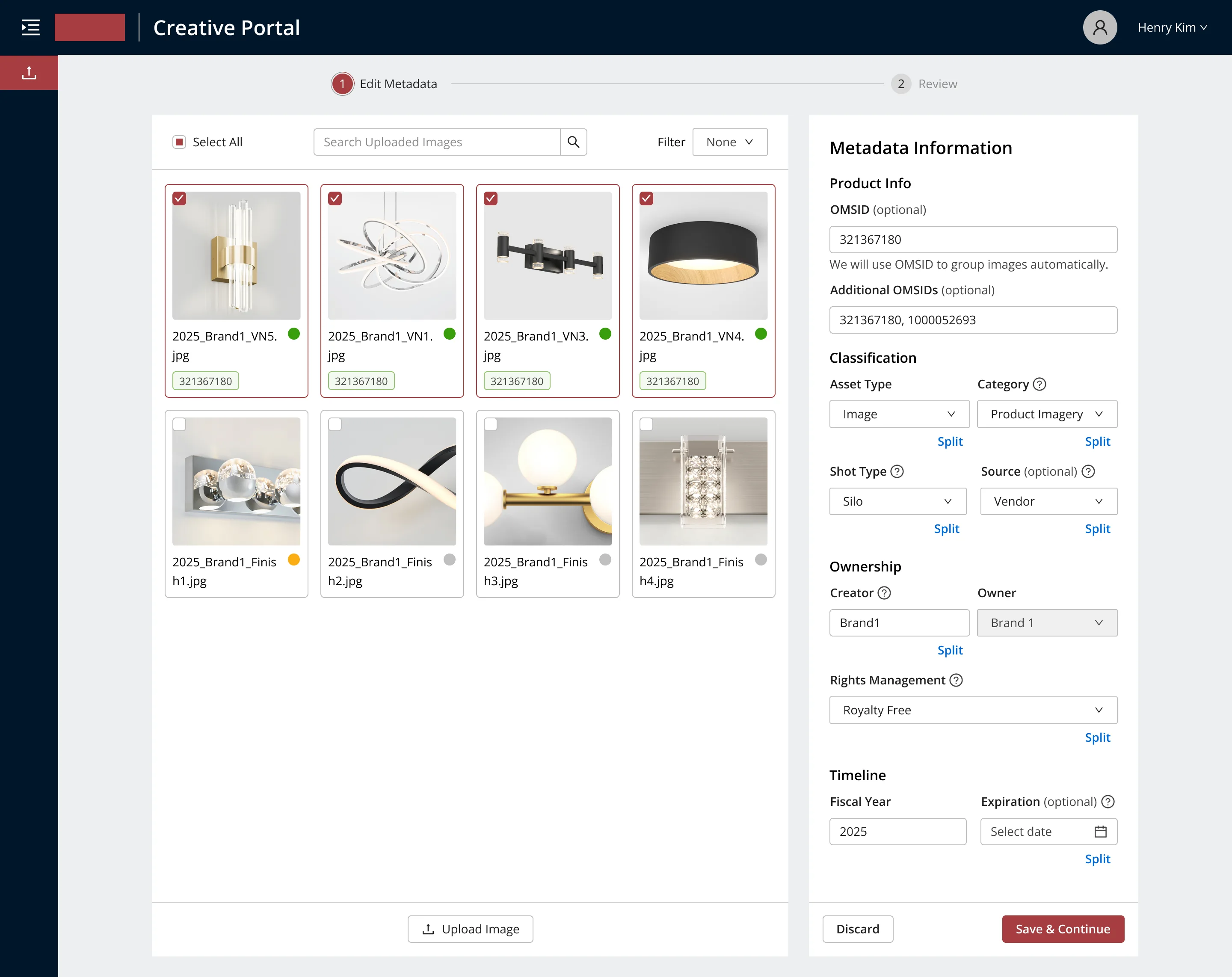
Fig. 01 — The shared asset library. Suppliers select a batch of images and apply metadata across all
of them at once.
01The bet
Every asset a supplier wanted to run in a campaign started with an email to a salesperson.
From the supplier's side it looked simple: send the asset to a Home Depot contact and wait.
Everything else — reviewing it, filing it — happened out of sight, by hand, on our end. That
simplicity hid the gap. A supplier could see what they'd personally sent in, and nothing of the wider
set of assets already available to them across the network.
Leadership saw the opening: extend the self-service shift already underway on brand pages to asset
management, and let suppliers manage their own creative. The audience was far larger than the
brand-page group — everyone from single-product sellers to national brands advertising across the
network. A reasonable bet. It just hadn't been tested with a single supplier, and I was asked to start
designing against it.
02What I found
I went in expecting to confirm the upload process was the problem. It wasn't. Suppliers were neither
happy nor frustrated with SharePoint — they barely touched it. The friction we were designing around
was ours, not theirs: the manual relay that kept every asset routed and re-uploaded by hand on our
side.
A second gap sat under that one. Suppliers could see their own assets live under their brand once
we'd reviewed and approved them, but couldn't view or manage that library directly — on-site,
off-site, or in-store. The assets existed; what was missing was the layer to see and manage them as a
set.
Widening the research surfaced three kinds of supplier approaching the work in different ways:
small businesses with a modest, self-contained set of assets; national brands with their own
marketing teams and a much larger library; and agencies uploading on behalf of several clients at
once. None of it had been scoped into the original ask. It reshaped the design and the whole user
journey around three starting points instead of one.
03The design
I started from the simple upload tool and designed outward — toward one place where suppliers upload,
browse, and manage every asset behind an Orange Apron Media campaign.
That put the library at the center: search what already exists across the network before requesting
anything new, and see the status of every upload without sending an email.
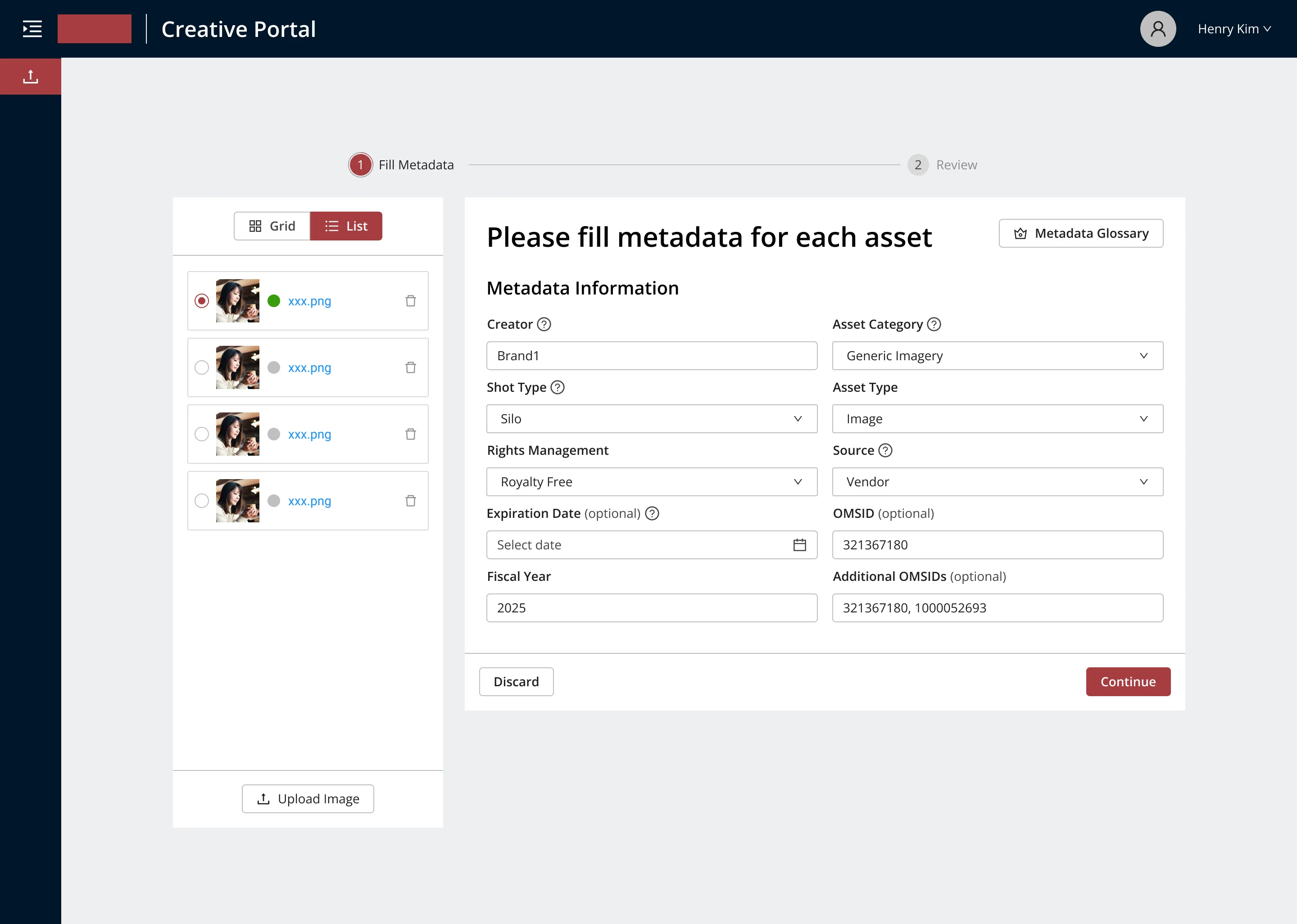
Fig. 02 — The first step toward that vision: editing metadata one asset at a time, shipped first to prove the model quickly.
The full version — batch editing and AI-assisted metadata across a whole library — was more than one
phase of engineering could take on. So we shipped the smallest real step first: reviewing and editing
metadata one asset at a time. It validated the model without waiting on the harder capability.
The batch view at the top of this page is where it's headed: select a set of images, apply shared
metadata across all of them at once, and let an AI pass read each one — product shot or lifestyle
shot — and pre-fill the fields a person would otherwise type by hand. That matters most for the two
personas carrying the most volume: national brands and agencies.
04Outcome
What shipped first wasn't the product. It was a clear picture of who we were building
for — and that reshaped the whole project.
The research changed what the team thought it was building: not a generic upload tool, but a shared
visibility layer around three distinct personas, with the manual internal relay as the first thing to
cut. That reframing is the real outcome of this phase. The MVP is scoped correctly because of it, and
it's ready for supplier testing next.
Today the MVP covers the uploading experience — getting a supplier's own assets into the system
without the manual relay behind it. The bigger step comes next: integrating with our
asset-management system, so a supplier sees everything already live under their brand, not just what
they uploaded, and manages it from one place.
A second designer has since joined as my part wound down, carrying the MVP toward that first round of
supplier testing.
05What I'd change
I'd validate the opportunity before a single screen got drawn, not after. We had a real business case
but not yet a tested problem — and designing against an assumption for even a few weeks cost me time I
later spent re-scoping. Next time I'd spend it up front.